
Photographing Pierce Point Ranch
The Iconic Remains of the Finest Example of a 19th Century, Marin County Creamery

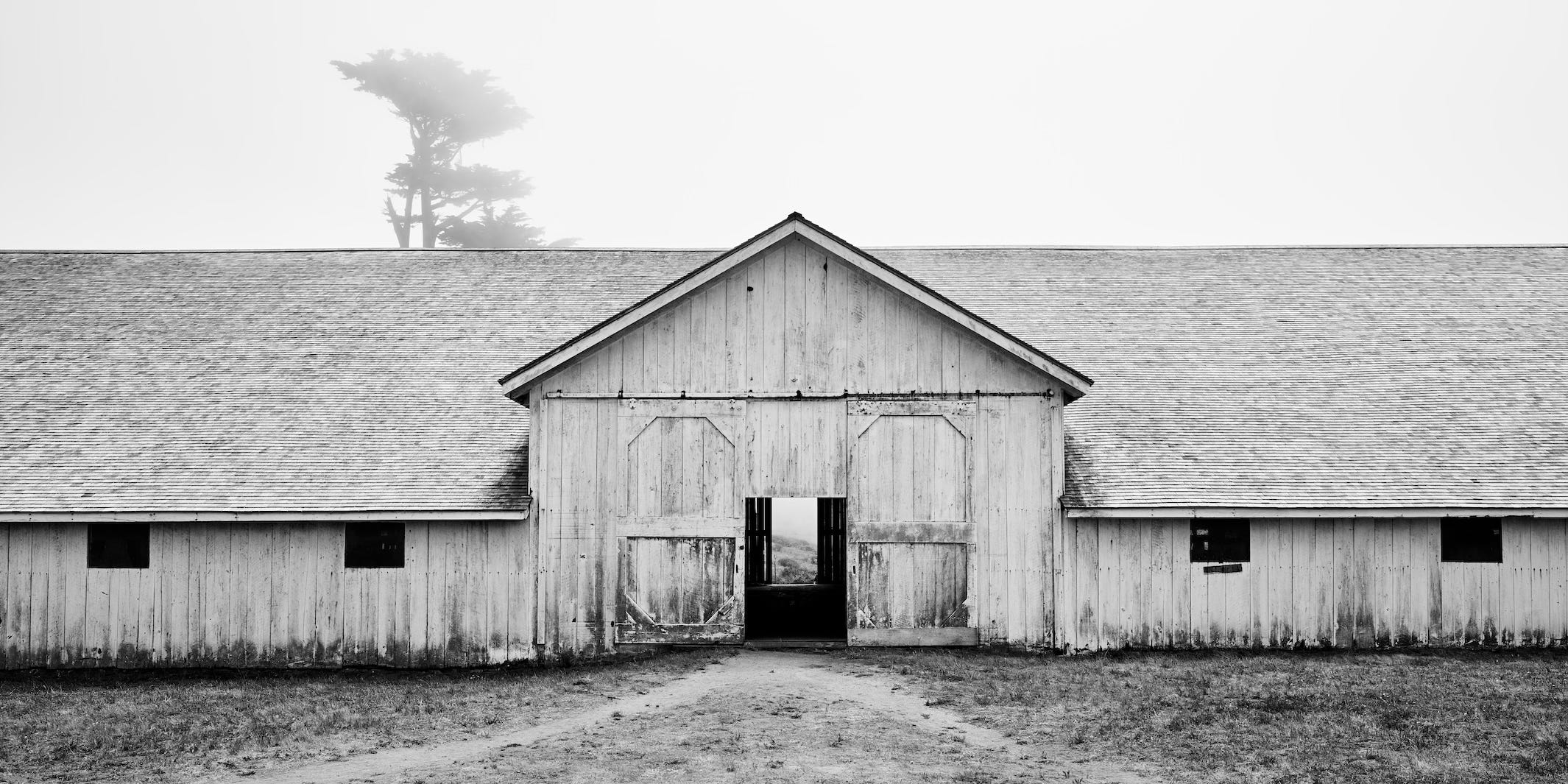
A lovely Sunday morning to you. This morning we journey to a remote peninsula along the California coastline, far away from the lights and sounds of the city, to the historic Pierce Point Ranch, a perfectly preserved 19th century creamery that was responsible for the birth of dairy farming in California. Today it is a national historic place, perfect for photography and we’re going to talk about it. So grab a cup of coffee and enjoy.
Northbound, Before Dawn
The yellow centerline passes directly under the middle of the truck in the darkness of the early morning. The road to Pierce Point Ranch is too twisty and too narrow to drive on your own side of the road. The soft sandy ground of the seashore has caused the ribbon of asphalt to ripple and undulate. This feels like Mr. Toad’s Wild Ride. At this hour the probability of encountering oncoming traffic is between zero and none, but we’re passing through the Tule Elk Reserve, so the probability of colliding with a big critter is high, so we take it slow.
Pierce Point Ranch is the end of the road. Far beyond the edge of cell phone coverage, it’s too remote and too obscure of a destination to encounter the dreaded “influencer” … especially at this early hour. We catch a glimpse of the ranch nestled in the fog of the morning twilight as we crest the last hill on the road, about a mile from the ranch.
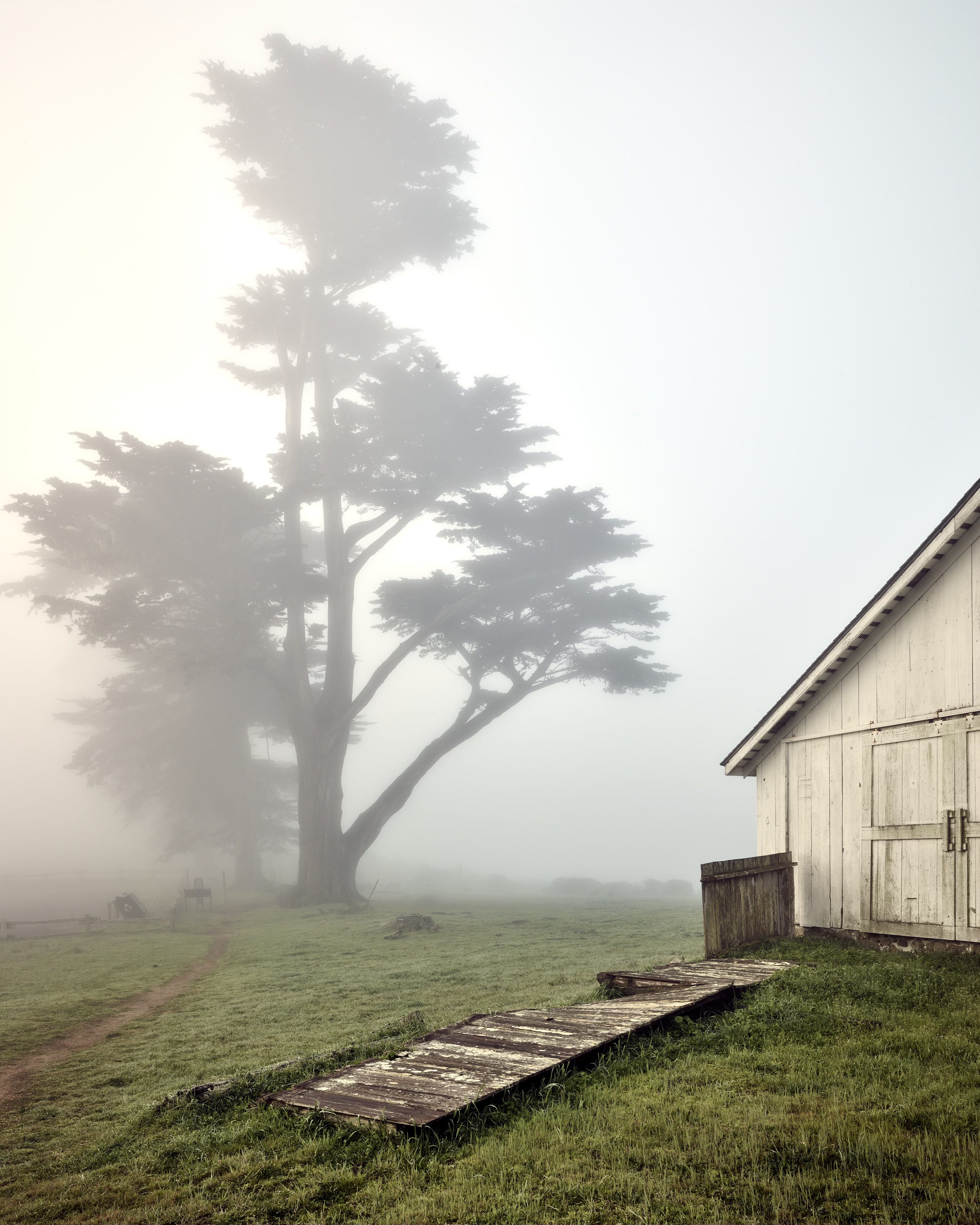
The parking area is a small dirt patch under a stand of mature coastal cypress trees. The morning is eerily quiet. There is no din. We are beyond earshot of civilization. I imagine the peacefulness and tranquility that the Coast Miwok Indians must have experienced before the iron horse arrived. Quietly yet excitedly, I latch a camera to the arca-swiss plate atop my tripod and move toward the iconic hay barn. The dew of the coastal grassland soaks the leather toe caps of my boots. This is living.
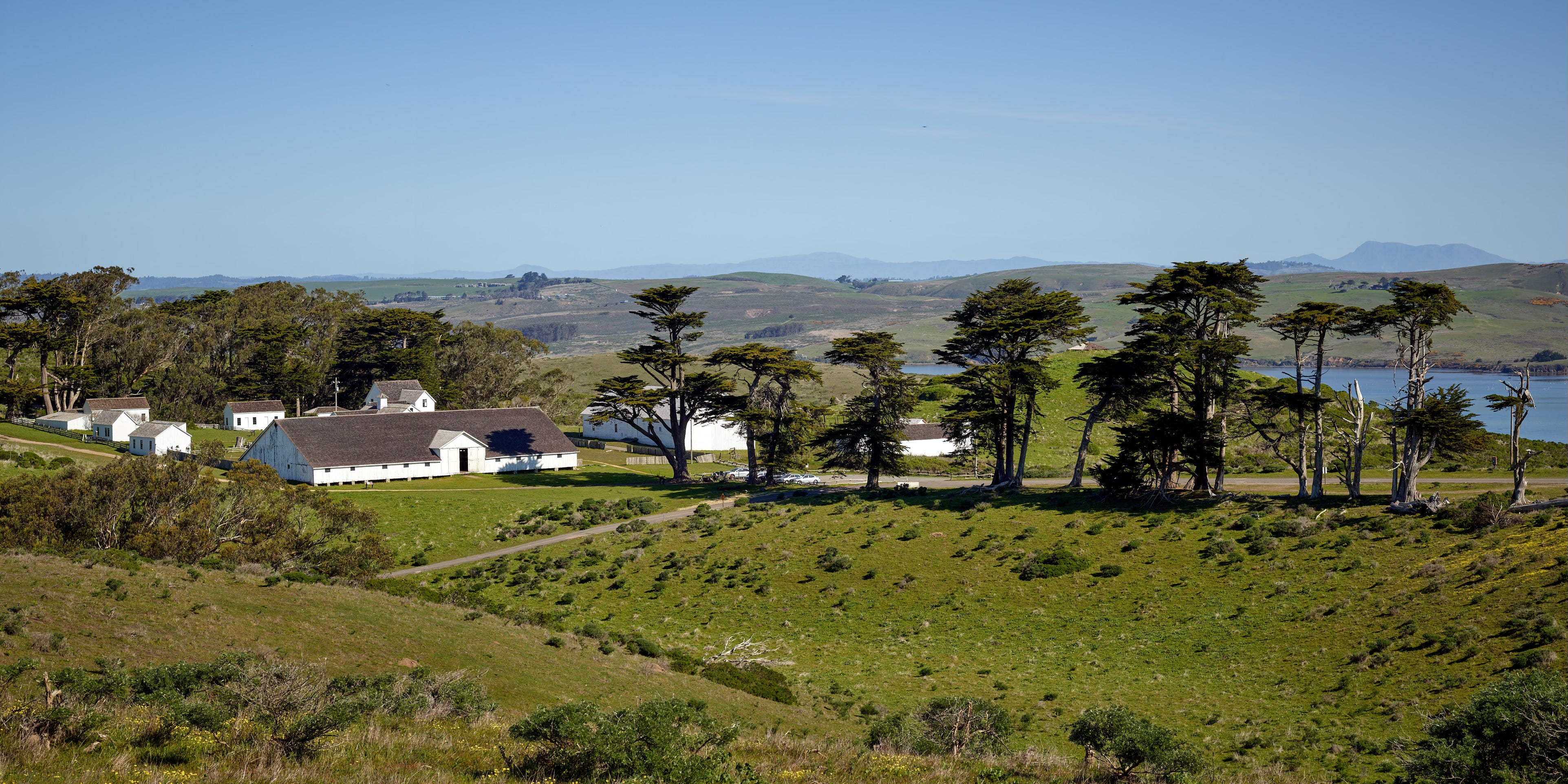
The Ranch
Vermont-born lawyers Oscar Lovell Shafter and James McMillan Shafter moved to San Francisco following the California Gold Rush of 1849. One of their first cases was a series of land disputes between Americano and Mexicano ranchers on the Point Reyes Seashore. Franciscan missionaries began dairy farming using feral cattle in 1817, but poor record keeping made it unclear where one ranchero ended and the next began. Lawsuits ensued.
In Northern California, the gold rush brought wealth and explosive population growth, creating a demand by hoteliers and restaurateurs for high quality butter, that up until that point was either filled with poor locally sourced product or butter imported from the East Coast. Being from Vermont, our lawyers knew a thing or two about dairy farming, and seized upon the opportunity by simply purchasing the 50,000+ acres of disputed adjacent farmland, thereby ending the property disputes.
Pierce Point Ranch was established in 1858, seventy-nine years before the Golden Gate Bridge was built. Since fresh milk, lacking refrigeration, couldn’t survive the trip to San Francisco, Pierce Point Ranch produced butter, and using the byproduct of the butter production, they raised hogs. The butter and the hogs were loaded onto schooners in the protected Tomales Bay and shipped (literally sailed) to San Francisco.
The Marin County dairies had their heyday in the late 1800s when they were producing nearly a million pounds of butter annually. But competition across the state, along with the San Francisco Earthquake of 1906 and the stock market crash of 1929 ultimately led to their decline. During the early 20th century the Sierra Club along with the National Park System designated the whole of Point Reyes as a National Seashore, and in 1962 President Kennedy signed a law guaranteeing its preservation. Today, the NPS calls Pierce Point Ranch the “best example of a West Marin dairy ranch from the 1800s.”
Let’s Take A Walk Together
On the northeast corner of the compound there’s a farmhouse used to board park employees. There lives a yappy dog who awakes like a firehouse alarm. To preserve the serenity of the morning, it’s best to tread quietly and avoid the farmhouse, so I take a clockwise route around the perimeter of the ranch, starting at the southwest corner, far away from the dog.
There’s a windswept tree in the ranch courtyard, that up until this point has been my nemesis. Such beauty, but I just can’t seem to find the right angle to shoot it. I catch a glimpse of the tree behind a wooden fence and decide that the tree is best suited to be part of a composition rather than the focus of the composition itself. I make an exposure that I’m happy with and continue north along the perimeter of the ranch.
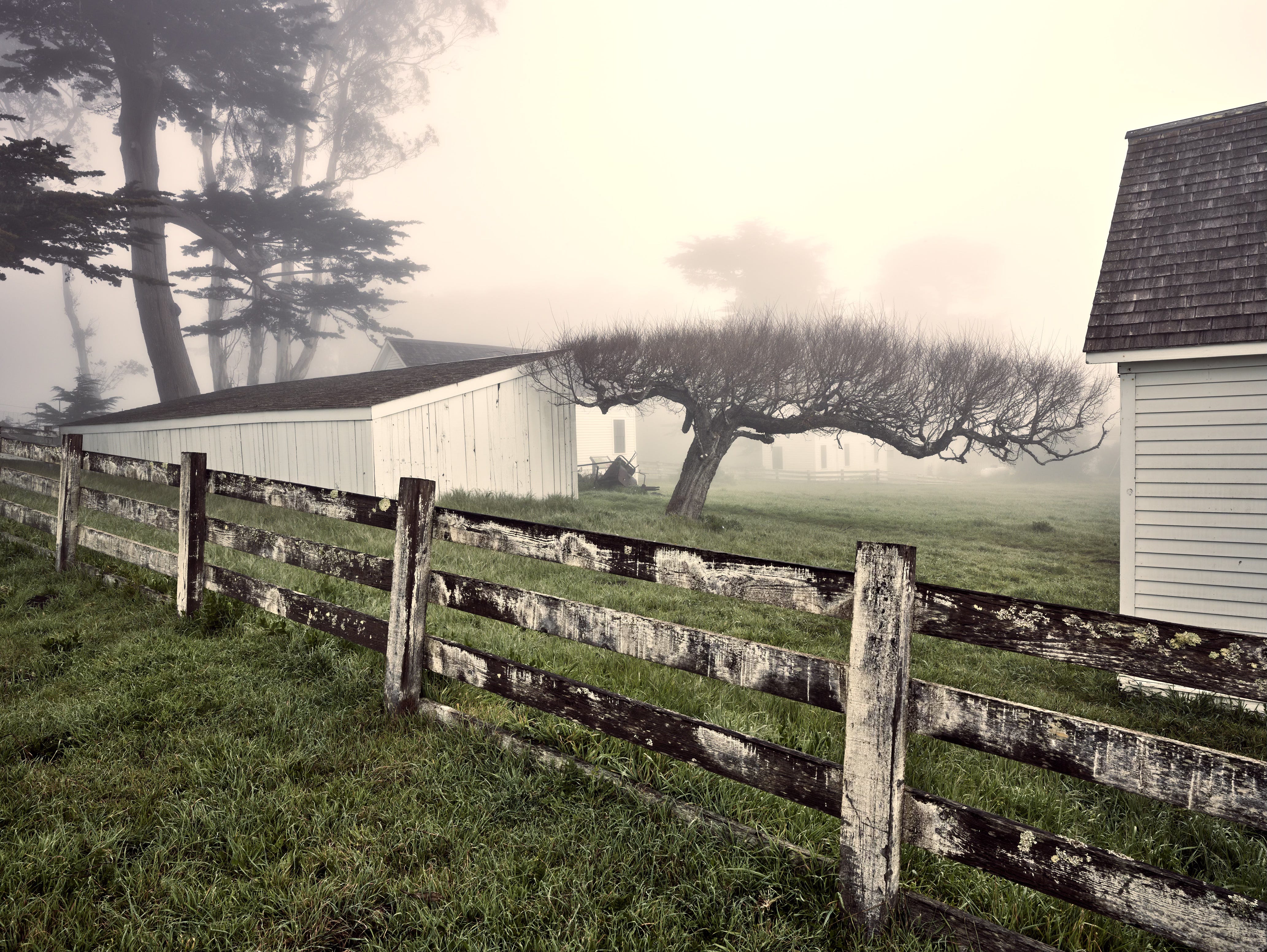
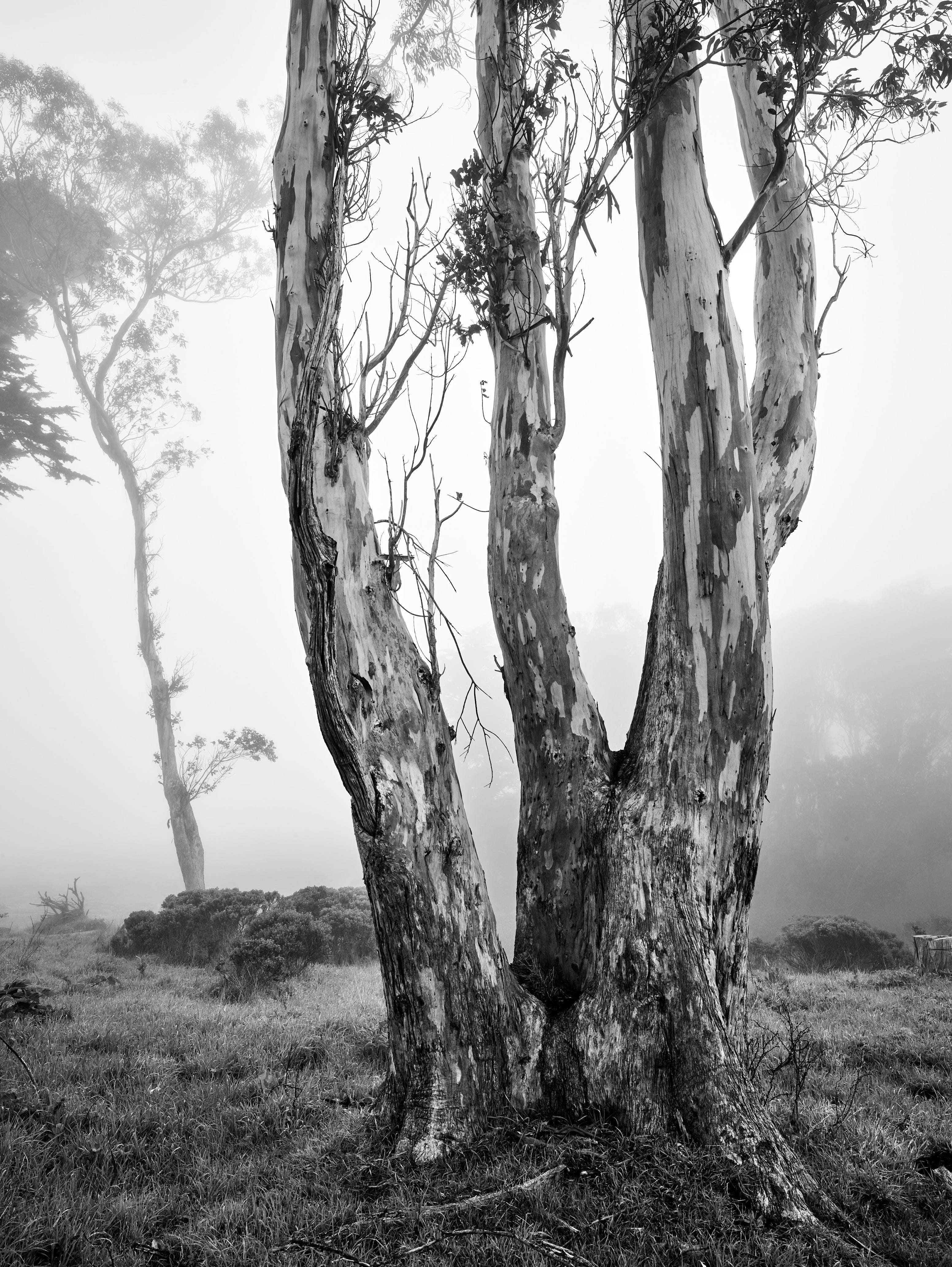
A stand of eucalyptus trees hangs over the buildings at the northwest corner of the compound. Eucalyptus are considered an invasive species, imported from Australia, and each year the State of California culls upward of 250,000 of them. But these trees seem to have found a permanent home here. A tree with four trunks stands like Neptune’s Trident in the heavy fog, so I make a couple of exposures before quietly entering the courtyard of the ranch.
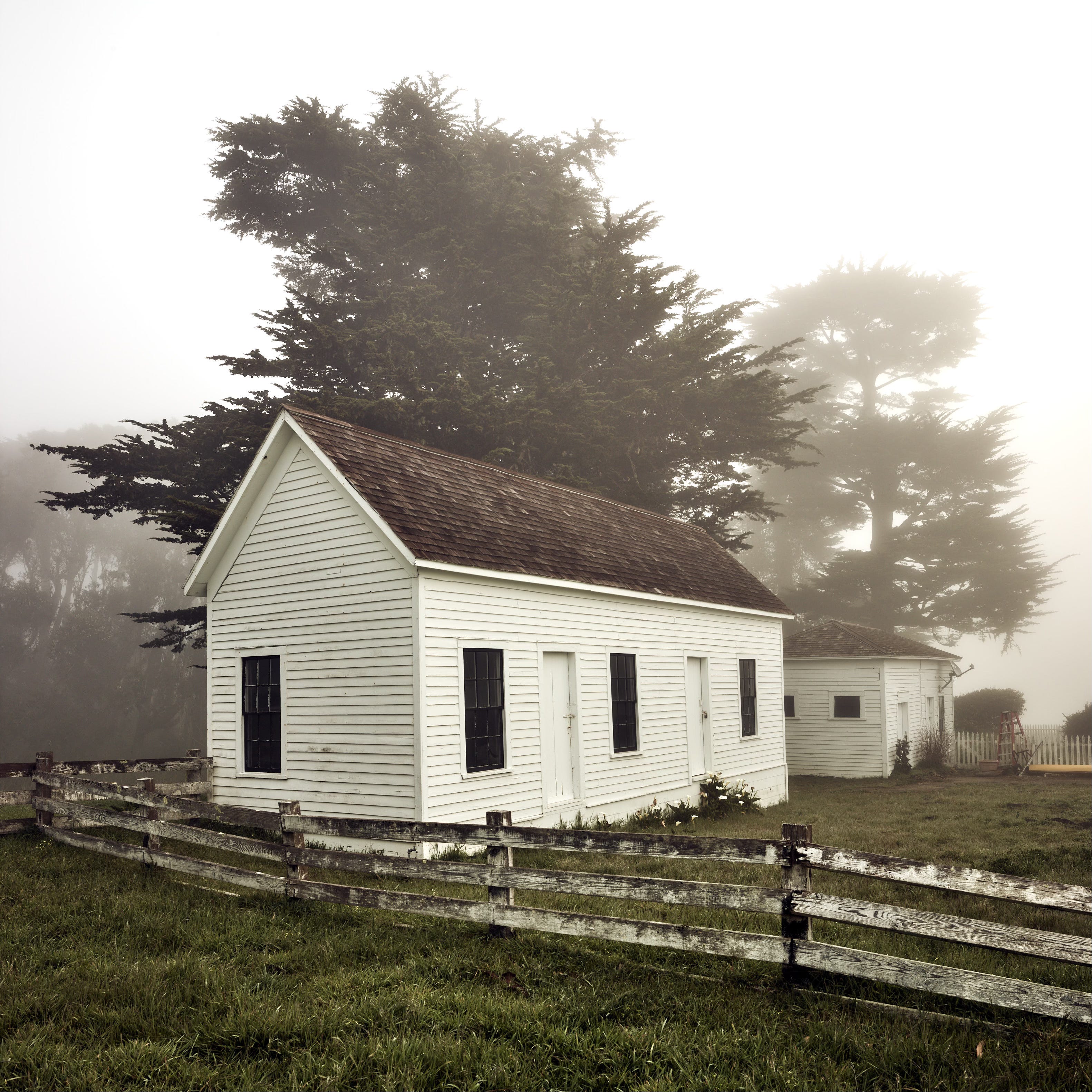
Pierce Point Ranch was very progressive with its view toward inclusivity. Immigrants from China, Canada, the Philippines, Mexico, Germany, Switzerland, Ireland, Sweden, Slovenia, and Portuguese families from The Azores all found their start at Pierce Point Ranch. Schooling was provided for ranch hands and their families. The schoolhouse and many bunkhouses remain intact.
Pierce Point Ranch & Ralph Lauren
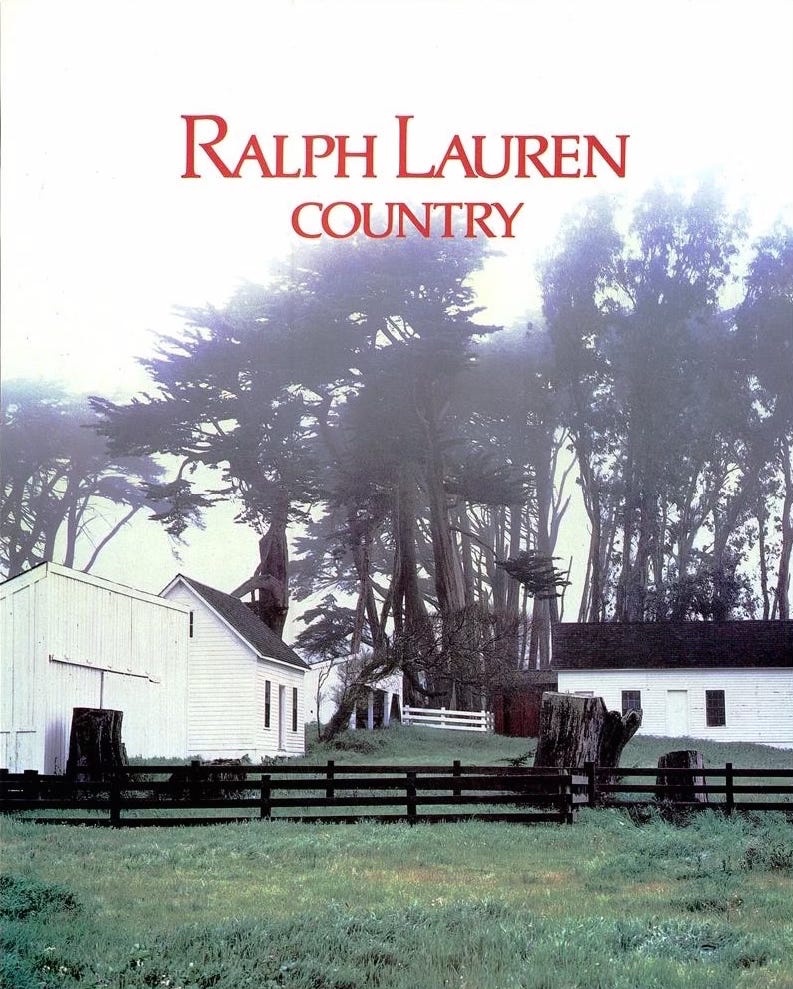
During the 1980s, when the whole of the fashion industry was focused on neon colors, synthetic materials and models caked in brightly colored makeup, Ralph Lauren commissioned a series of ads glamorizing the understated elegance of country living. Models appeared sans makeup, wearing denim, roughout leather overcoats with shearling collars and Native American jewelry of turquoise and silver.
To drive home his point, Lauren hired photographer Bruce Weber to make the photograph for this ad. No models. No product. Just the courtyard of Pierce Point Ranch and the words “Ralph Lauren Country.” It was a simple, yet bold and powerful statement.
About My Images
I have visited Pierce Point Ranch many times, but on only one or two occasions did I arrive to find the dense fog that makes this place magical. Many of my images from this newsletter are pulled from a trip in early March of 2020. (Side note: During the course of that week, the world came to a screeching halt due to covid, and by the time we returned home the grocery stores were depleted of food and toilet paper.)
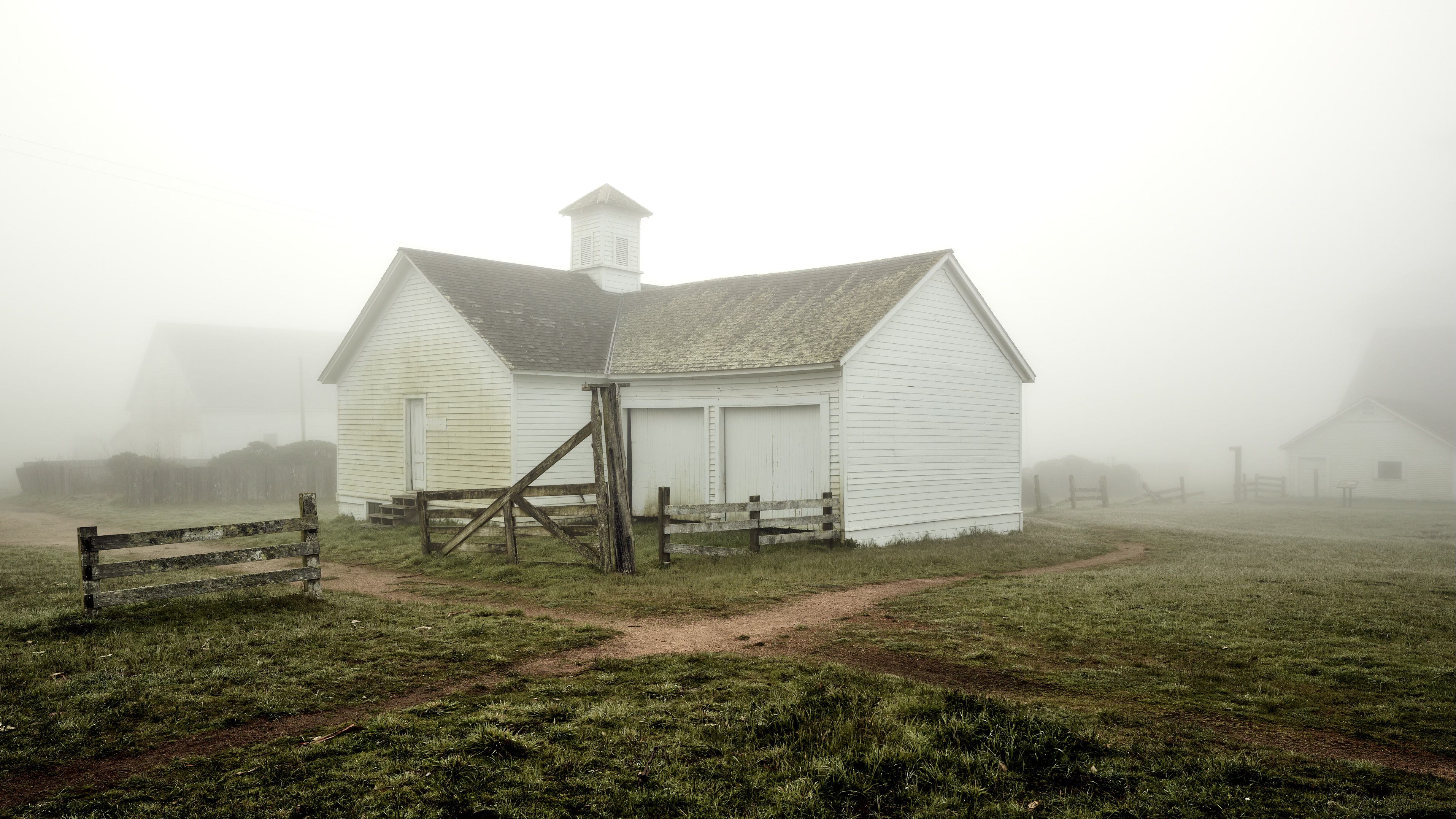
All of my images from this session were originally processed in Capture One as black and white. But my tastes have changed and of late (and I’m speaking of my own work here, not the work of others) I feel like digital black and white seems synthetic and unnecessary for conveying my message. So when preparing the images for this newsletter, I reprocessed most of the images using 50% desaturated color, and then warmed them about 500 degrees kelvin above neutral, the raised the shadows and added a buttered boatload of contrast.
My kids would probably say that the black and white images have more “rizz.” But these days, I really have an aversion to beating people over the head with too much post processing. In fact, I have an aversion to beating people over the head with anything … which is why you’ll most likely find me standing out in a field, finding my zen on a cold foggy morning, by myself or with the mafia.
All of the photos in this episode were photographed using a Phase One IQ180. Taking advantage of the massive number of megapixels at my disposal, I intentionally composed a little wide, then used the vertical keystone tool in Capture One to correct the vertical surfaces of the buildings. In photography, perfectly vertical lines on manmade structures are essential, in my opinion.
Pierce Point Ranch is a terrific place to photograph. Those who are determined enough can make it here for sunrise from as far away as San Francisco. But it’s best to stay closer at a VRBO in Inverness or at the Tomales Bay Resort. Following a visit to Pierce Point Ranch you can easily photograph the Point Reyes Tree Tunnel and the Point Reyes Lighthouse on the same morning. I hope you find the time to experience this wonderful place too. Just don’t wake up the dog.
Speak softly and carry a big camera; you will go far my dear friends.
Until next Sunday, stay focused.
This has turned into the best written newsletter I subscribe to. I genuinely look forward to receiving it every Sunday.
Great images Rod, enjoyed the historical footnotes too. We all need to gather there when the local wildflowers are in bloom too.